The back-engine of
Ninjacart's entire trade.
The Trade Desk is a full-fledged trade & ERP platform built to seamlessly run and manage Ninjacart's entire trade business. I owned it end to end — strategy through to the interface — as its product manager and sole designer, and it now acts as the back-engine of all of Ninjacart's trade, praised by customers and stakeholders as one of the most successful projects in the company.
A whole new way of handling business — every touchpoint in one place.
Process inefficiencies were holding back scale.
In Q2 2023, Ninja Global — Ninjacart's global business vertical — set out to build a single trade system that could handle every touchpoint of a trade, from generating a lead to closing the deal and settling payments. A strategic bet on the scale and efficiency it could unlock if built properly.
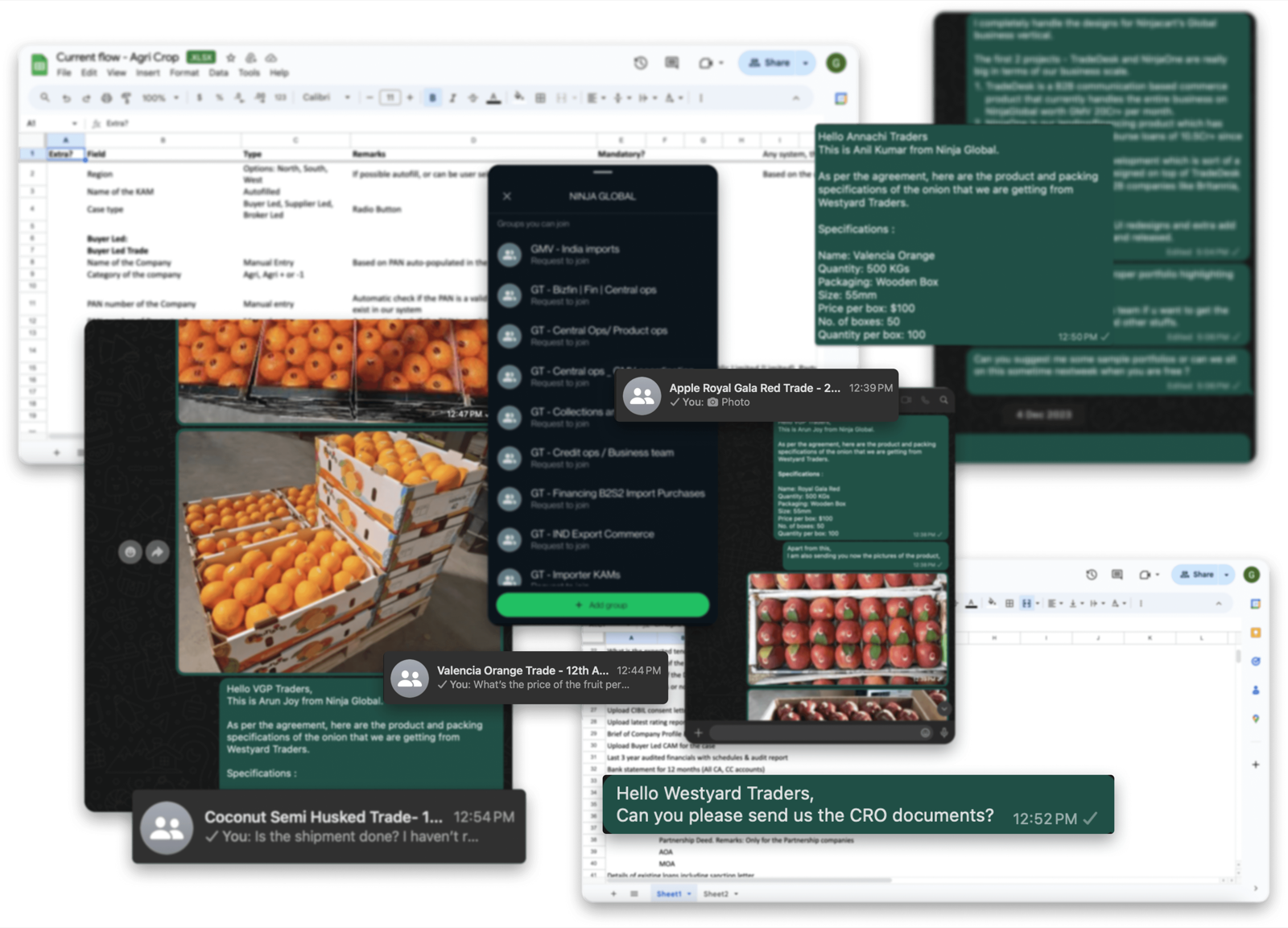
The reality on the ground: nearly 85% of the communication between Buyers, Sellers and Ninjacart happened over unorganised WhatsApp groups — demand & supply collection, matching, negotiation, tracking, every part of the trade — backed by Excel sheets. It worked, barely, and it could not scale.
Break the trade — and build it again.
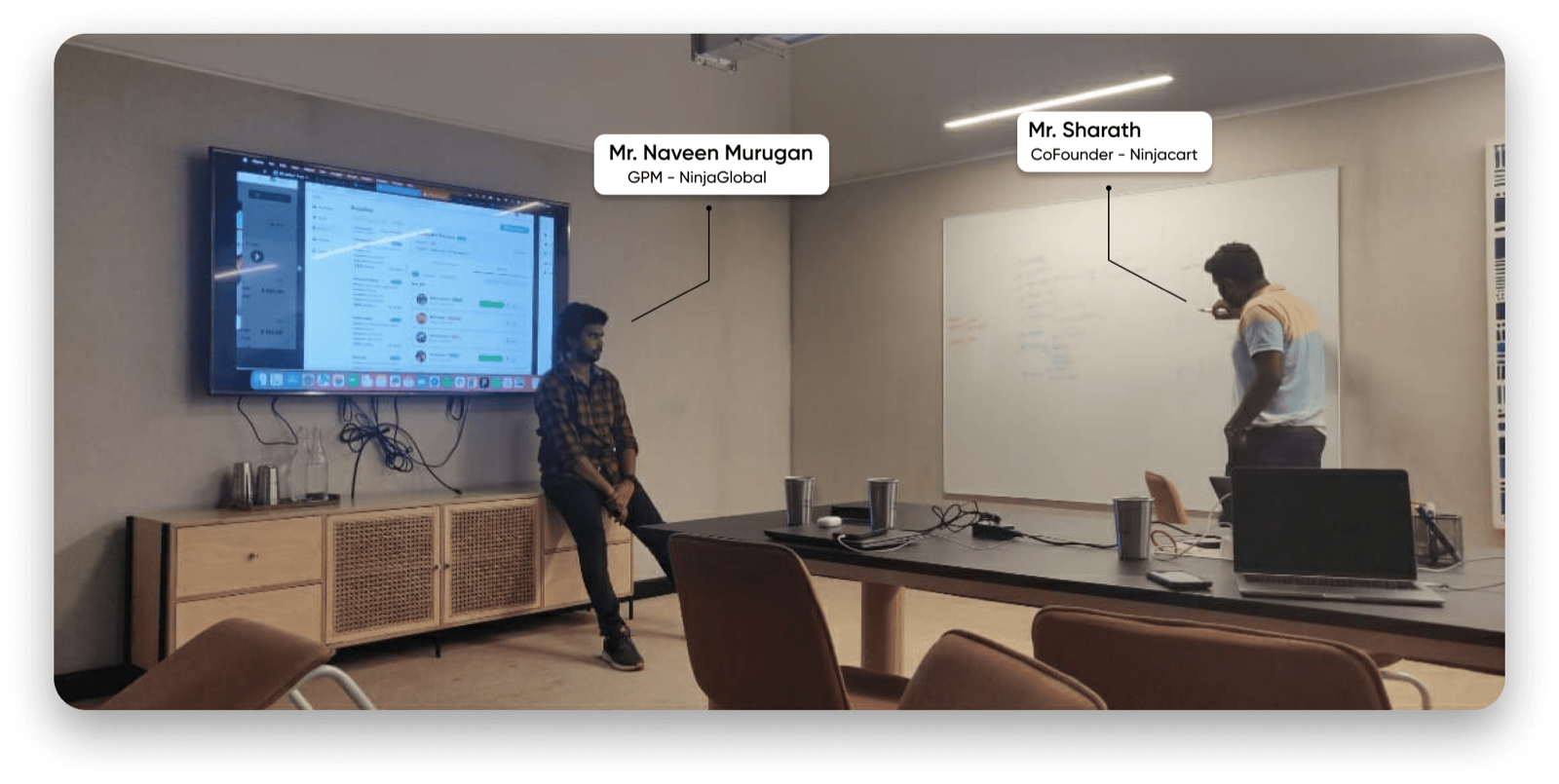
The brief from the GPM, reinforced by the co-founders and business heads: build and launch a single trade system swiftly and at scale. Owning it alone as product manager and designer, the responsibility — and the potential business impact — sat with those calls. The philosophy: break the trade into its pieces and rebuild each one into an open, scalable system that could be plugged into any use-case.
Four modules, one trade network.
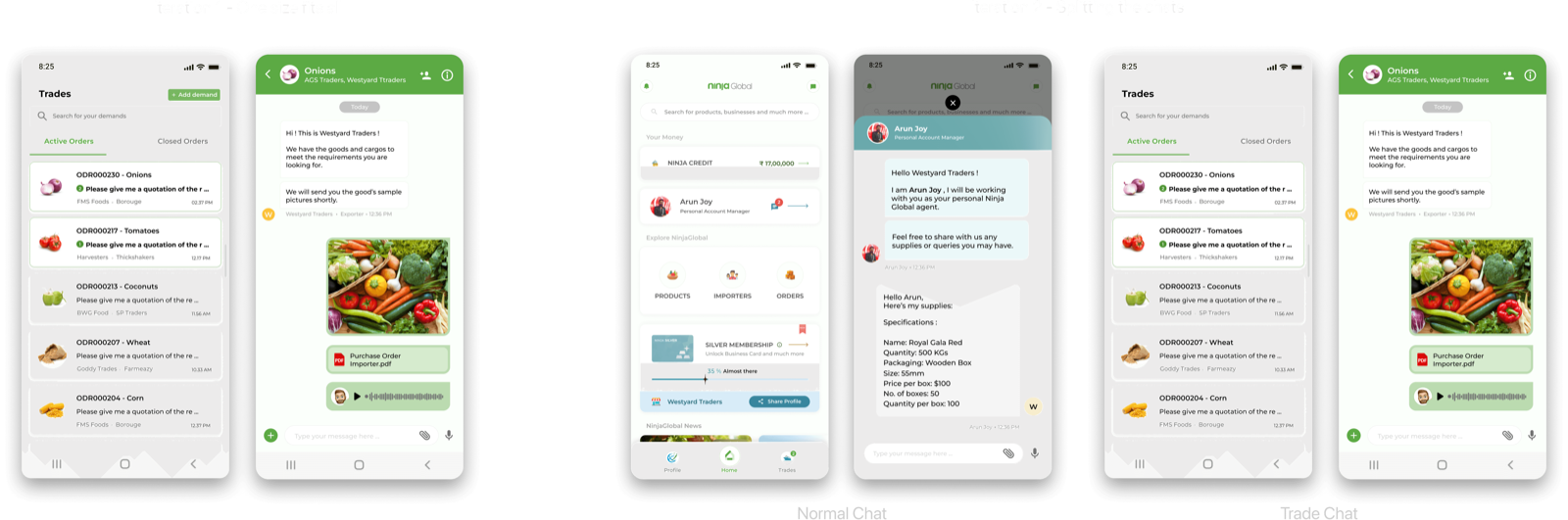
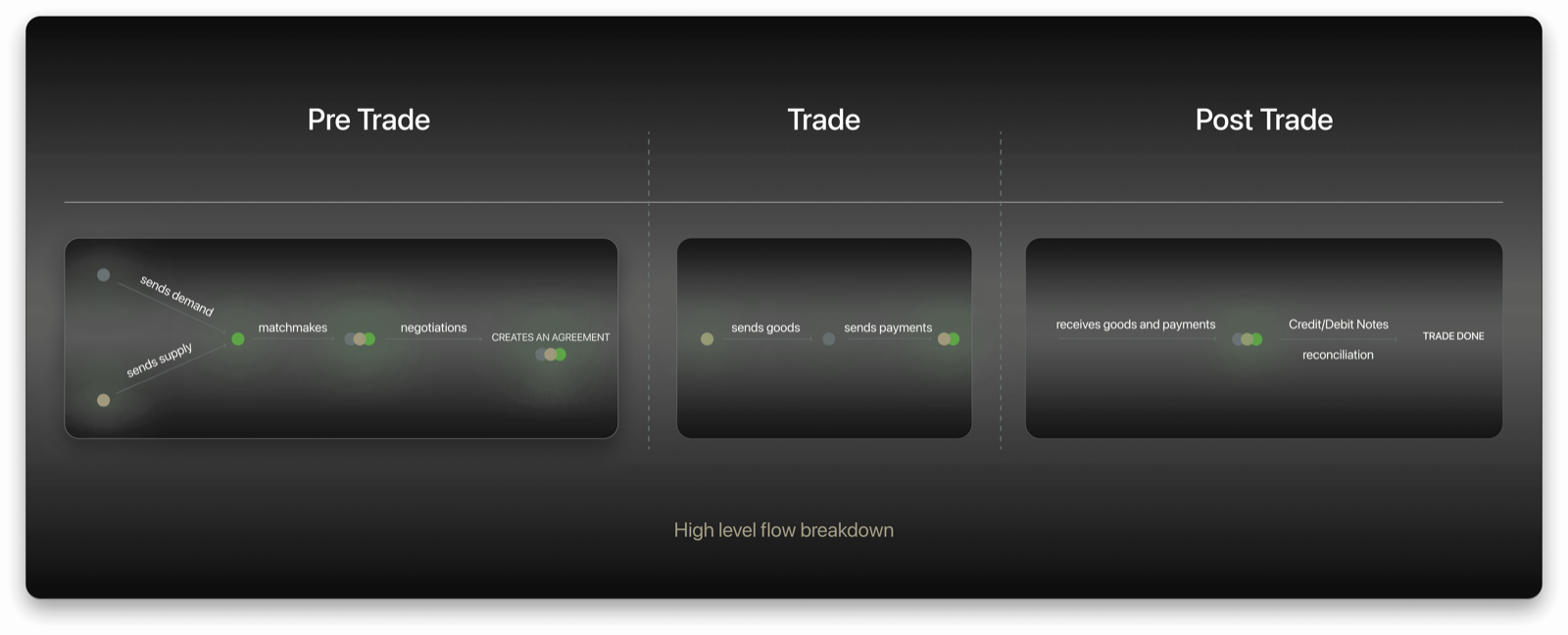
The trade was rebuilt as four connected modules — pre-trade, the chat-based trade, post-trade payments, and the ERP dashboard.
Getting in the supply & demand
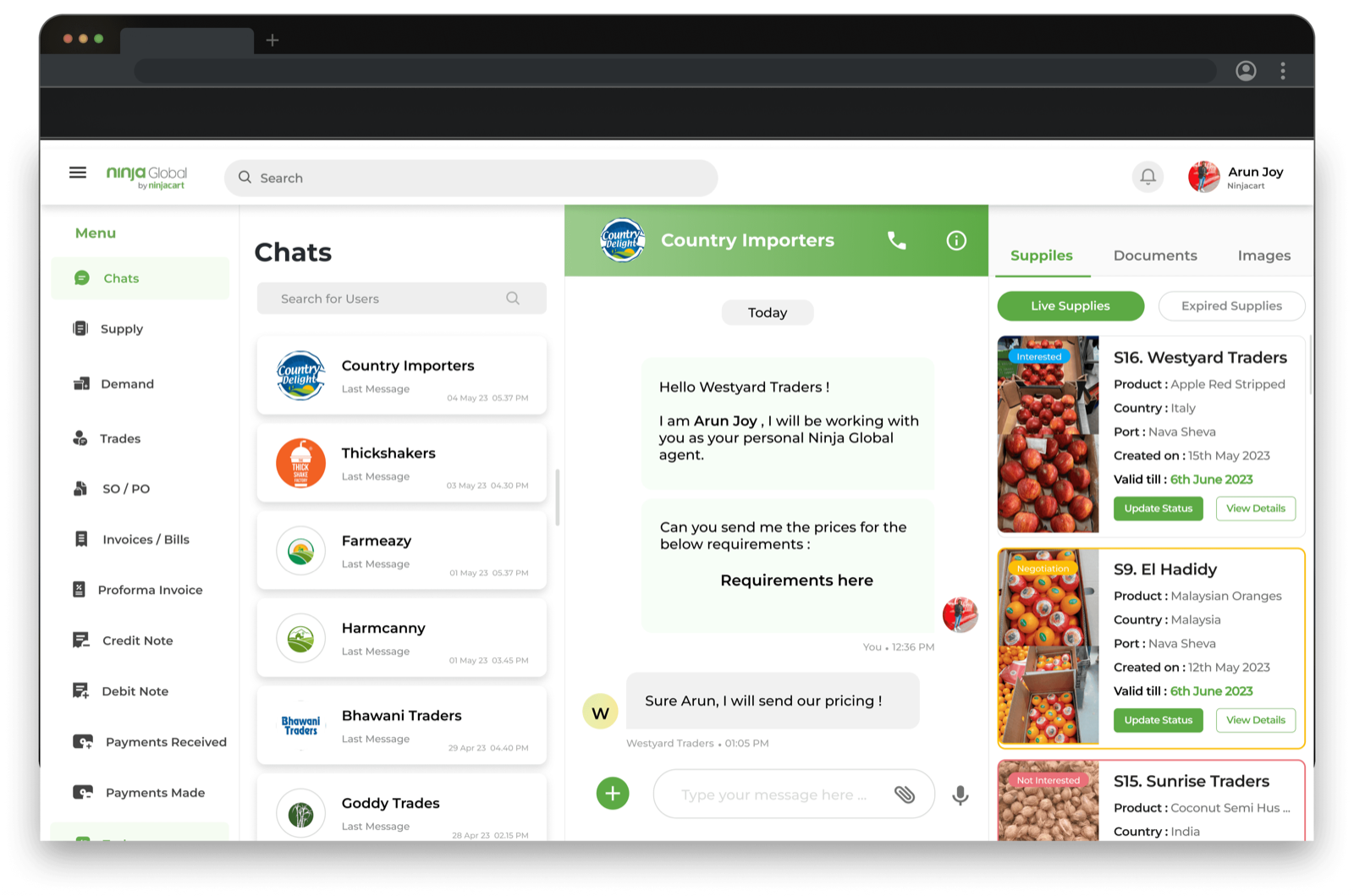
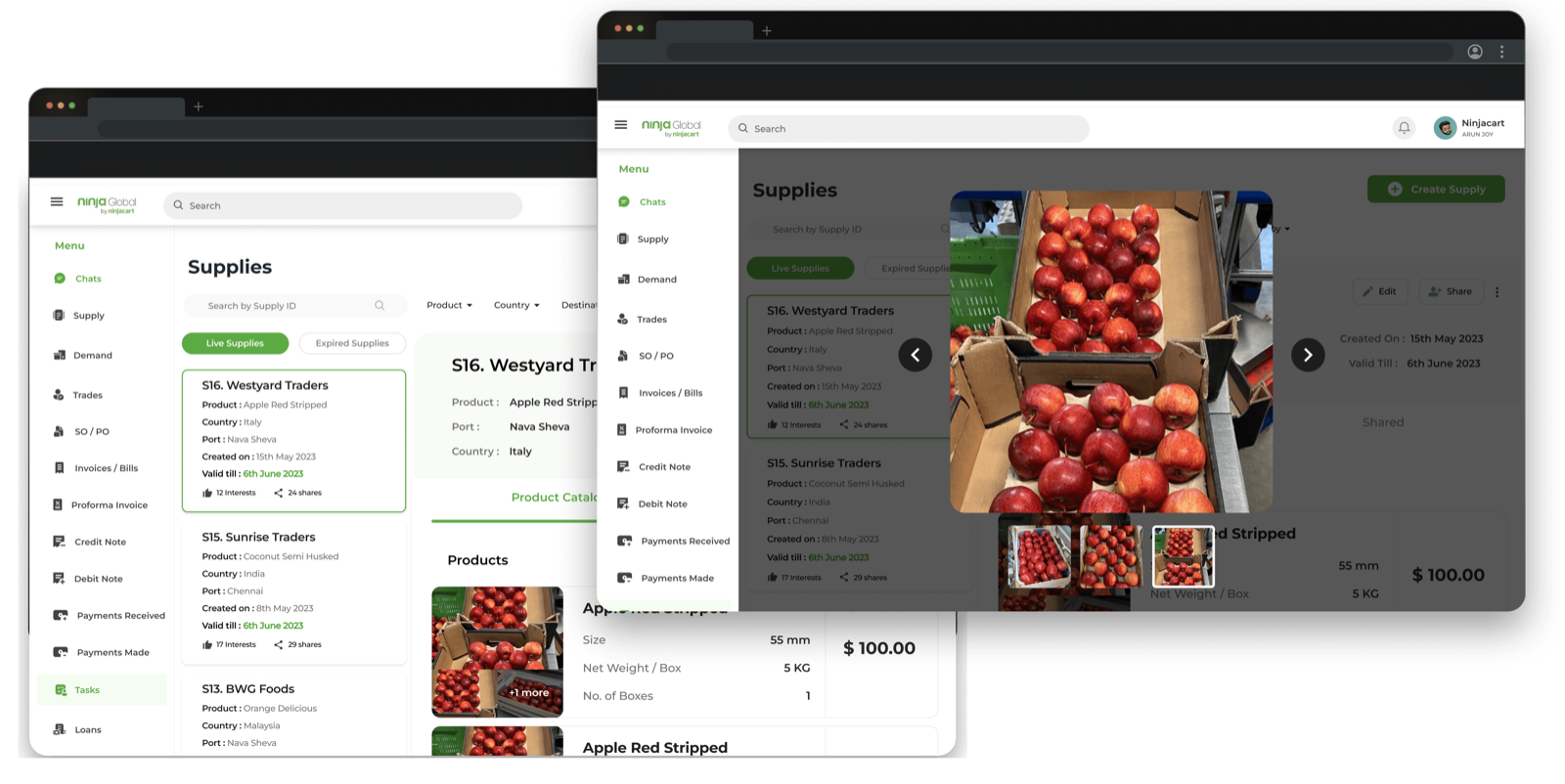
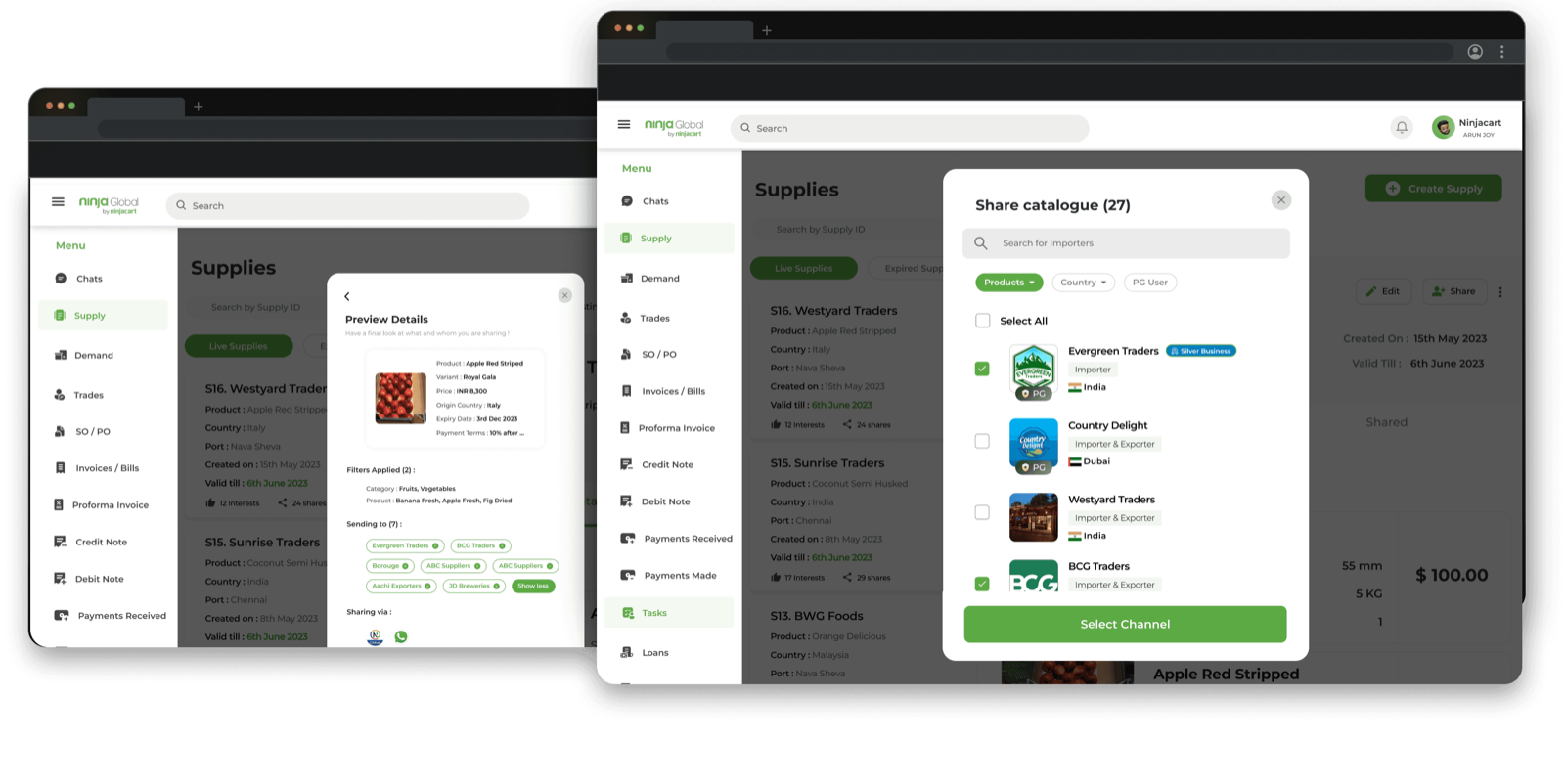
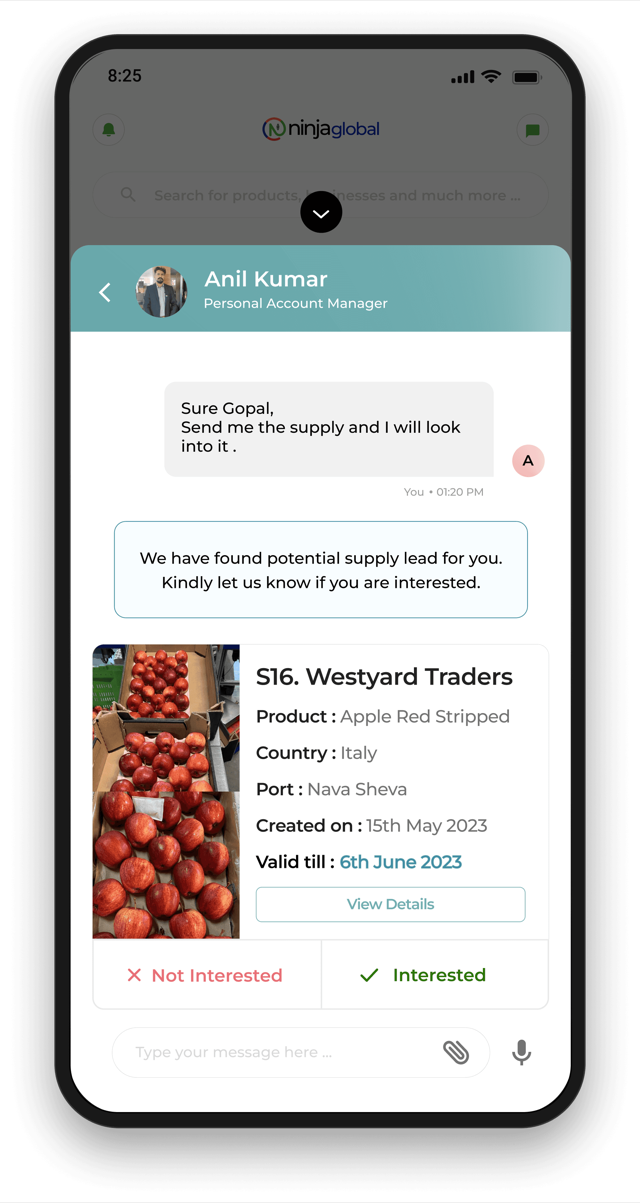
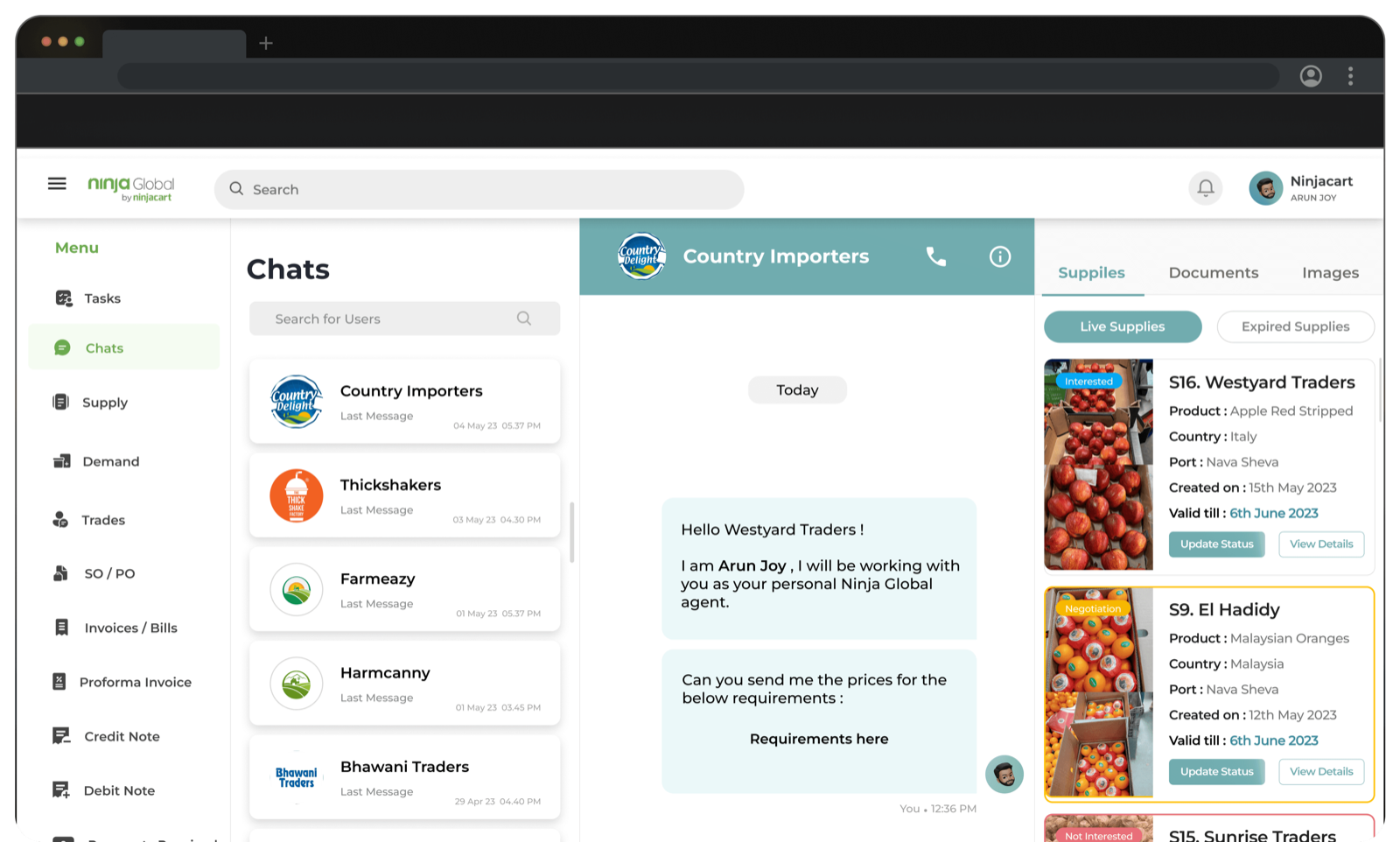
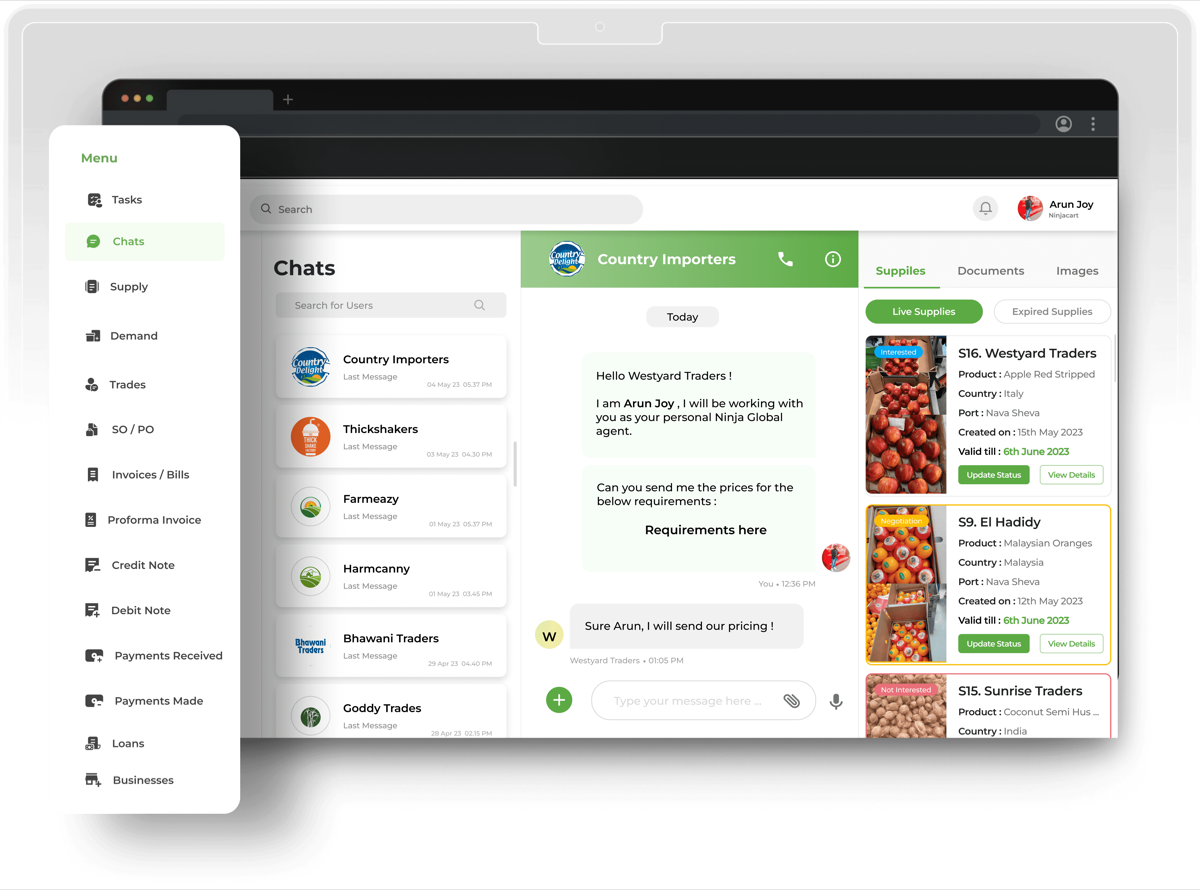
Every trade begins with a supply and a demand. Since WhatsApp was the primary, convenient channel for sharing them, the pre-trade module captured that input in a structured way: a supply details page to share and track supplies in a few clicks, with the ability to define a status against each individual supply.
A central, chat-based trade
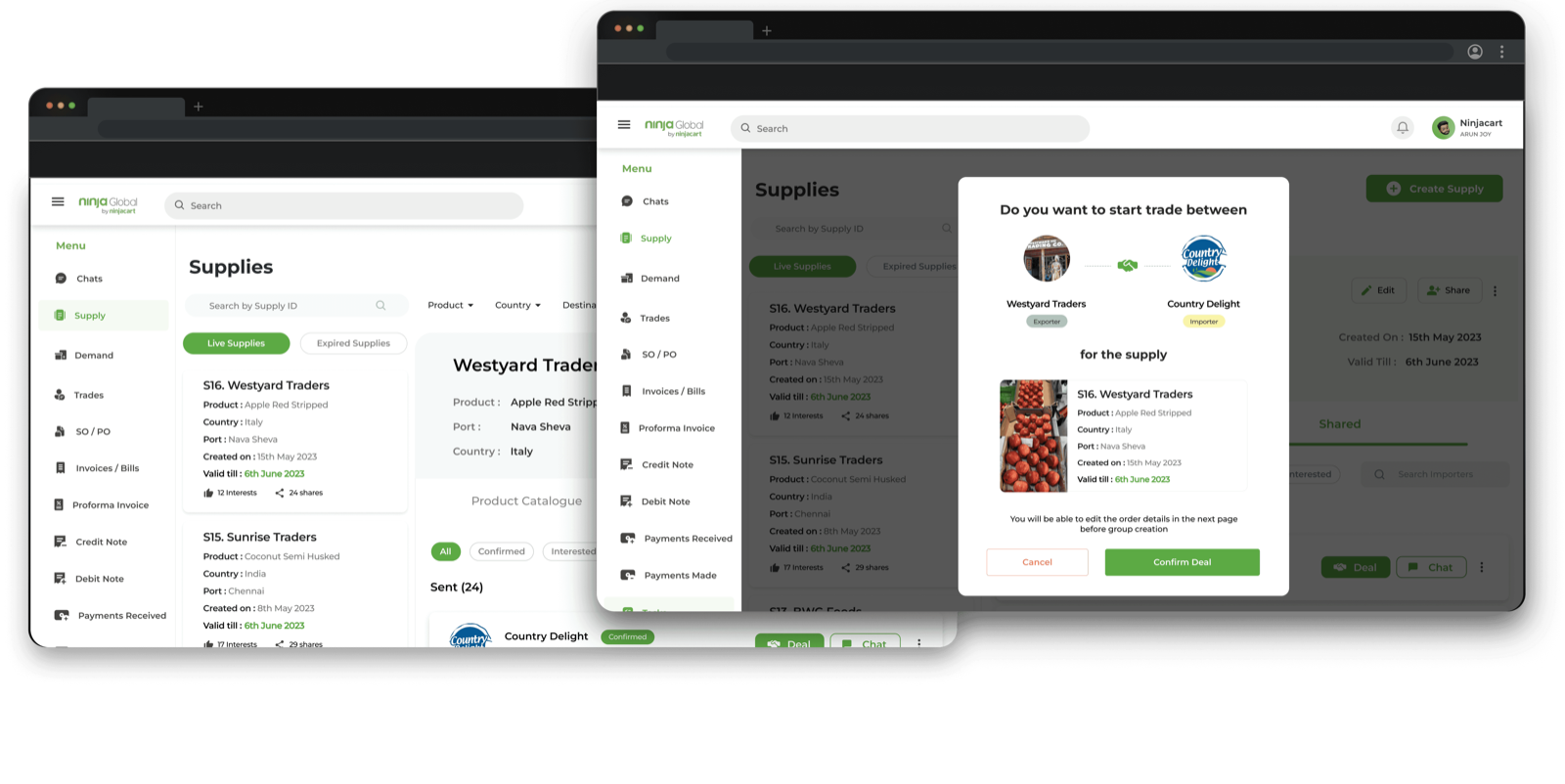
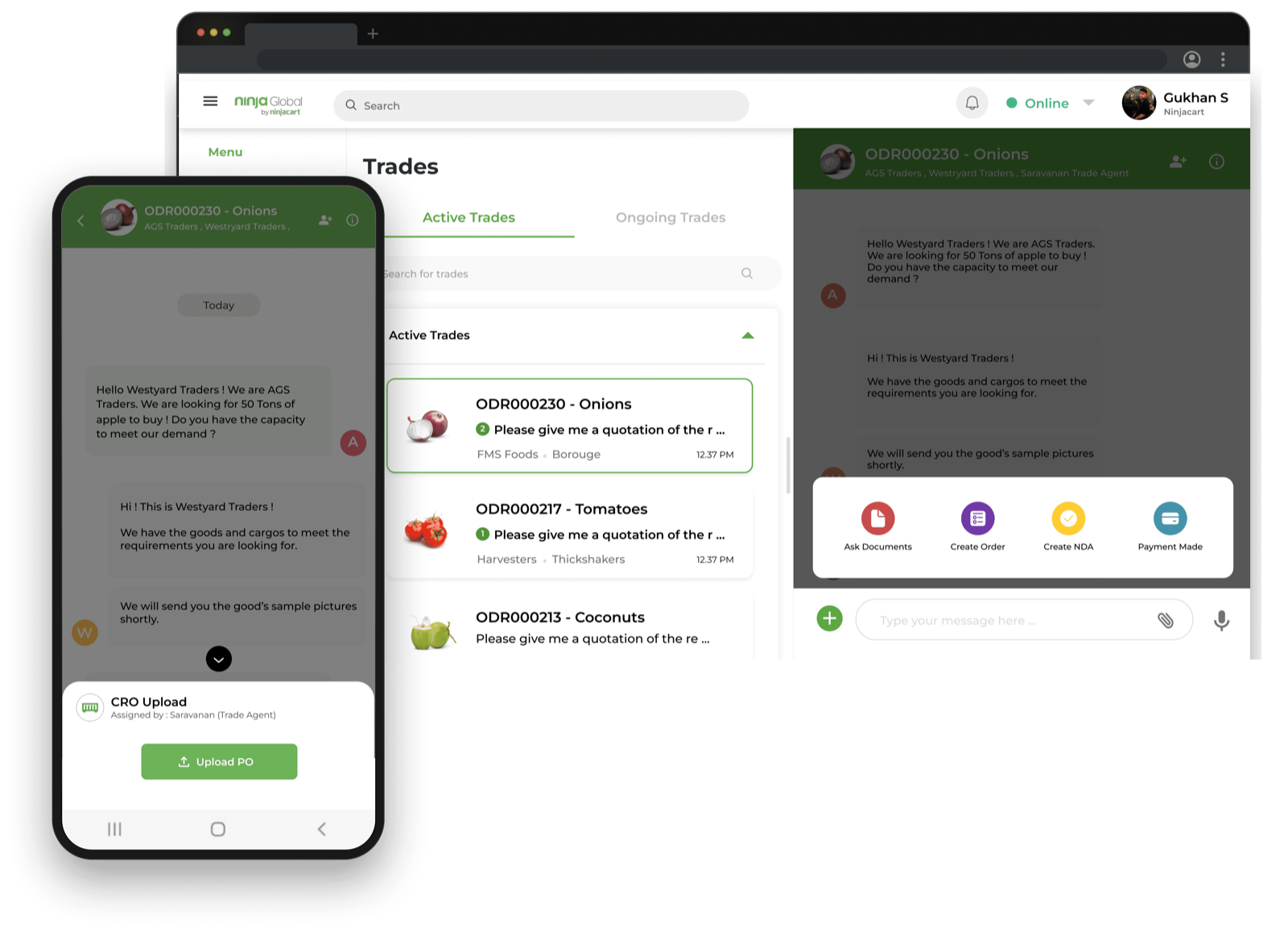
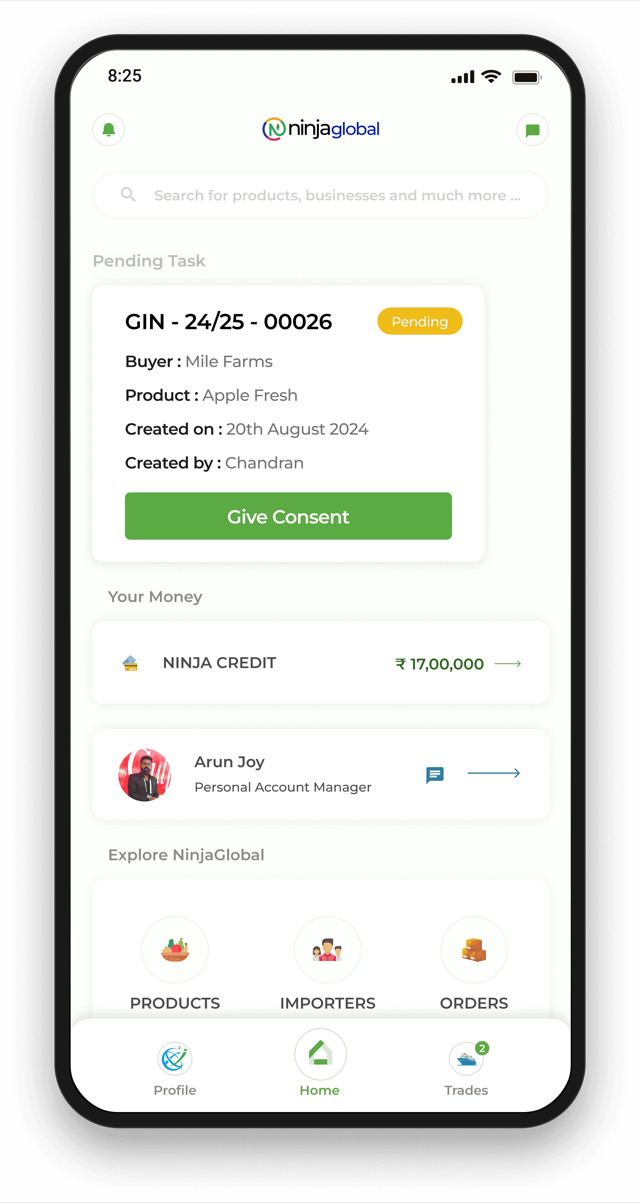
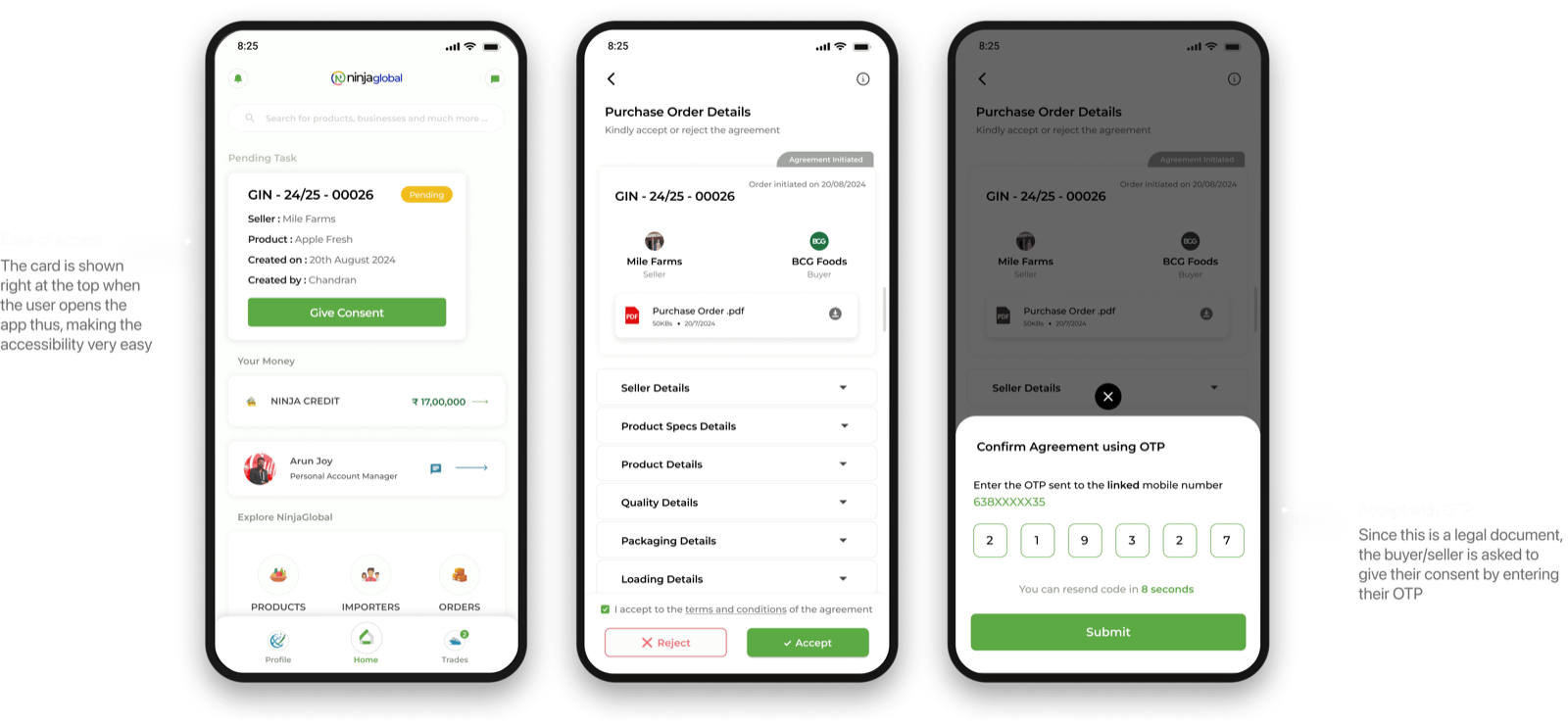
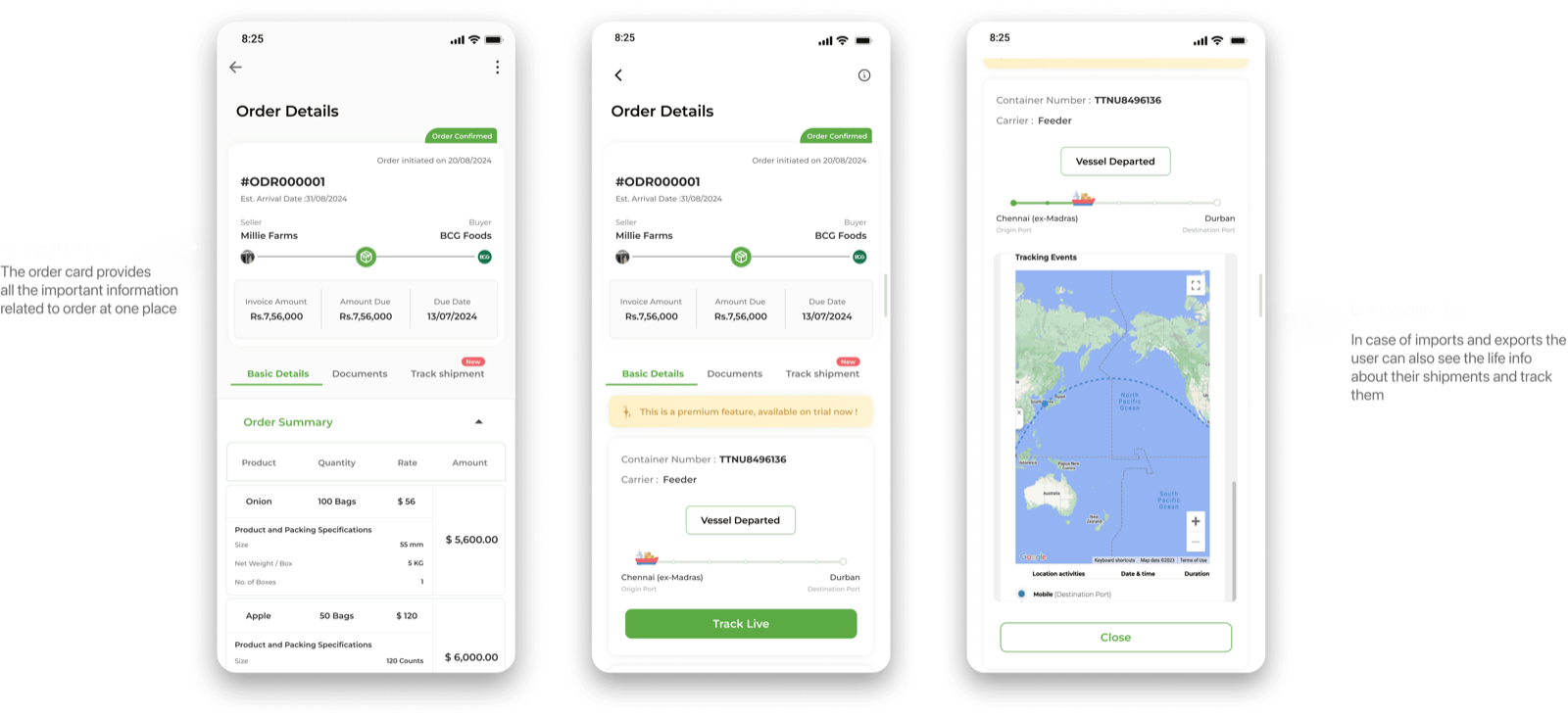
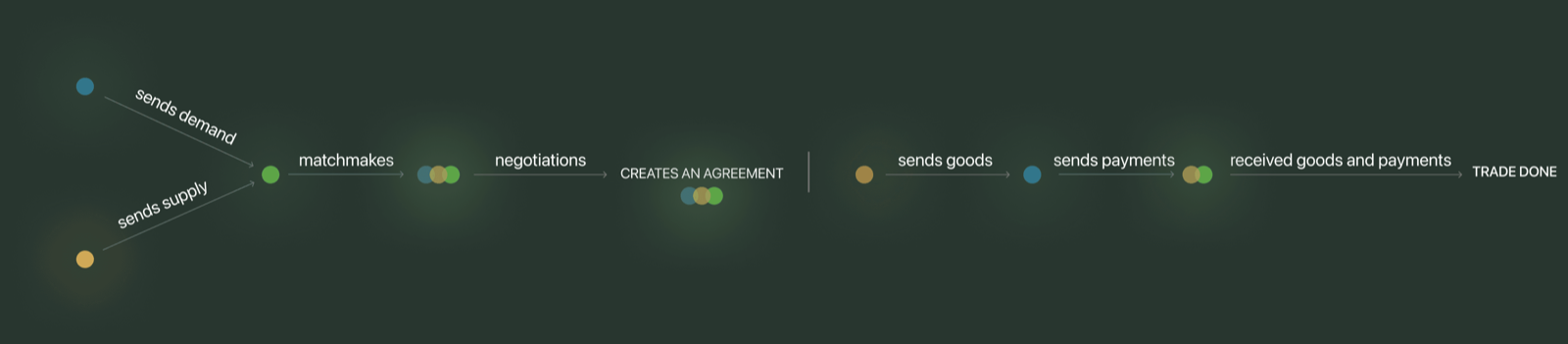
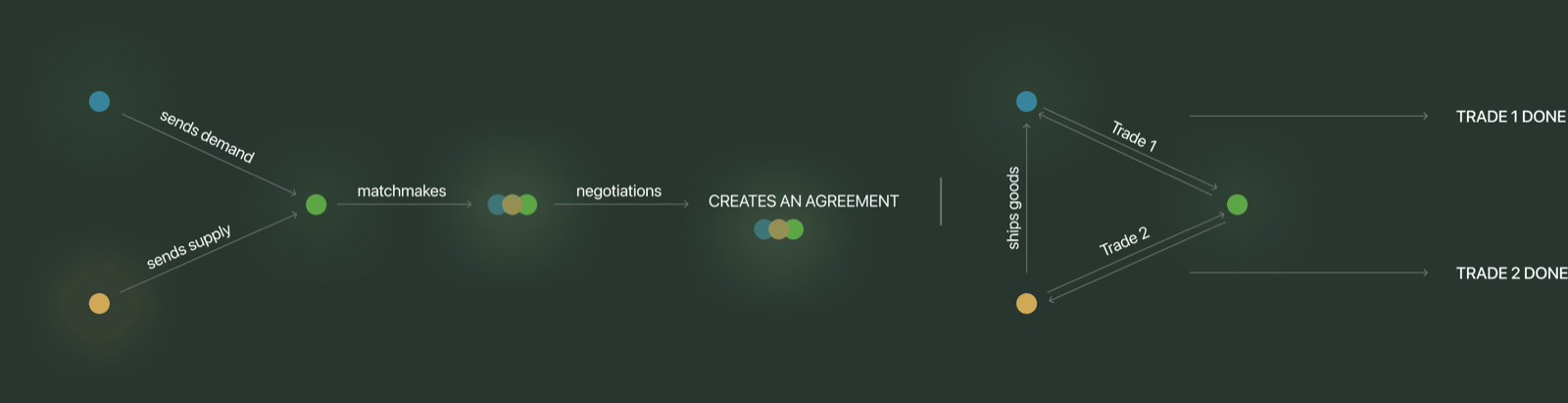
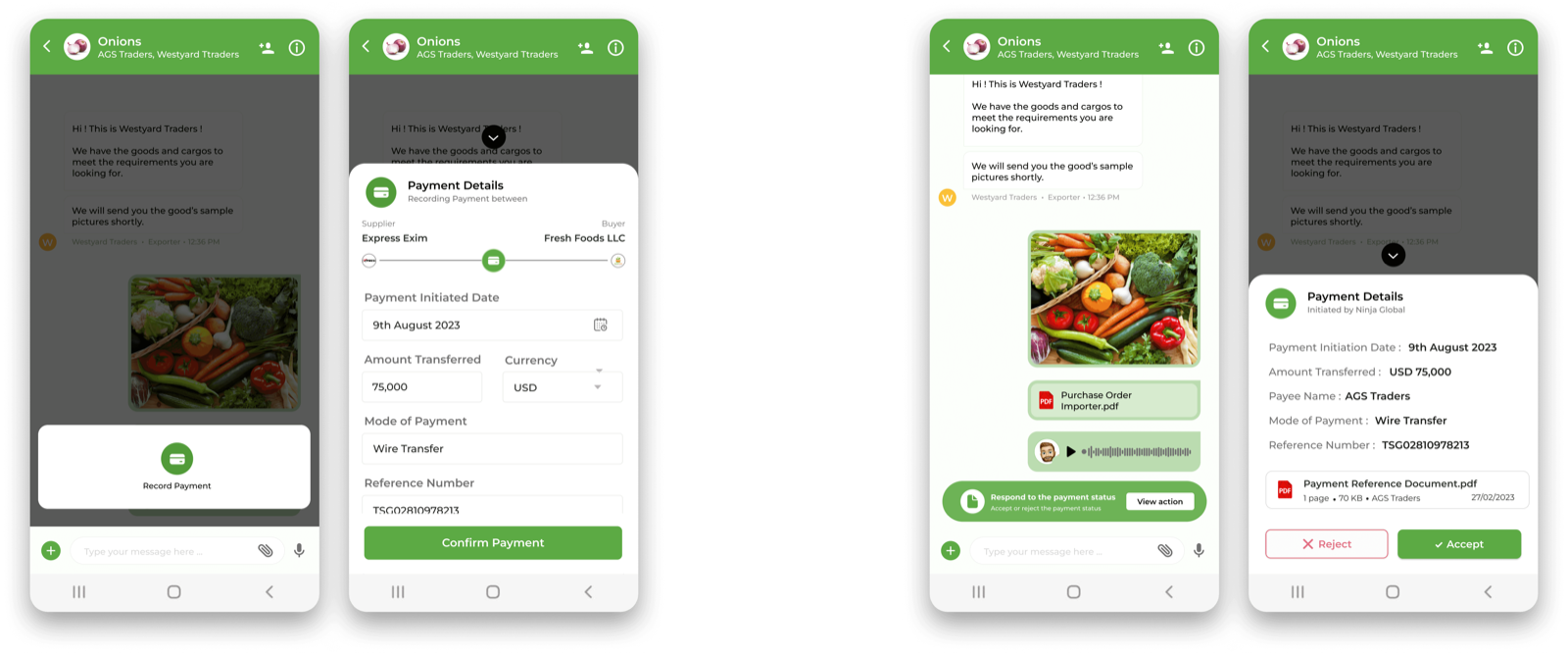
The heart of the platform: a central chat-based trade system with custom built-in functionalities. Buyers and sellers give consent to start the trade, see live trade information, and customers handle order acceptance — all maintained in the internal system. It supports both the Platform-Model and Bill-to / Ship-to trade structures.
Make payments with ease
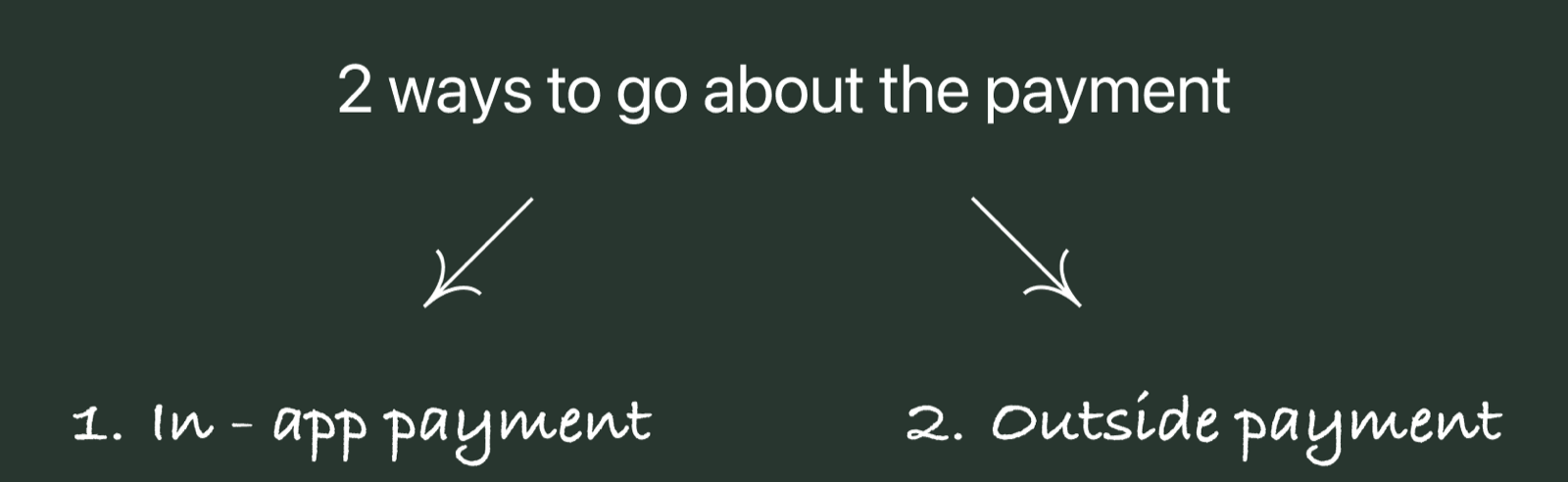
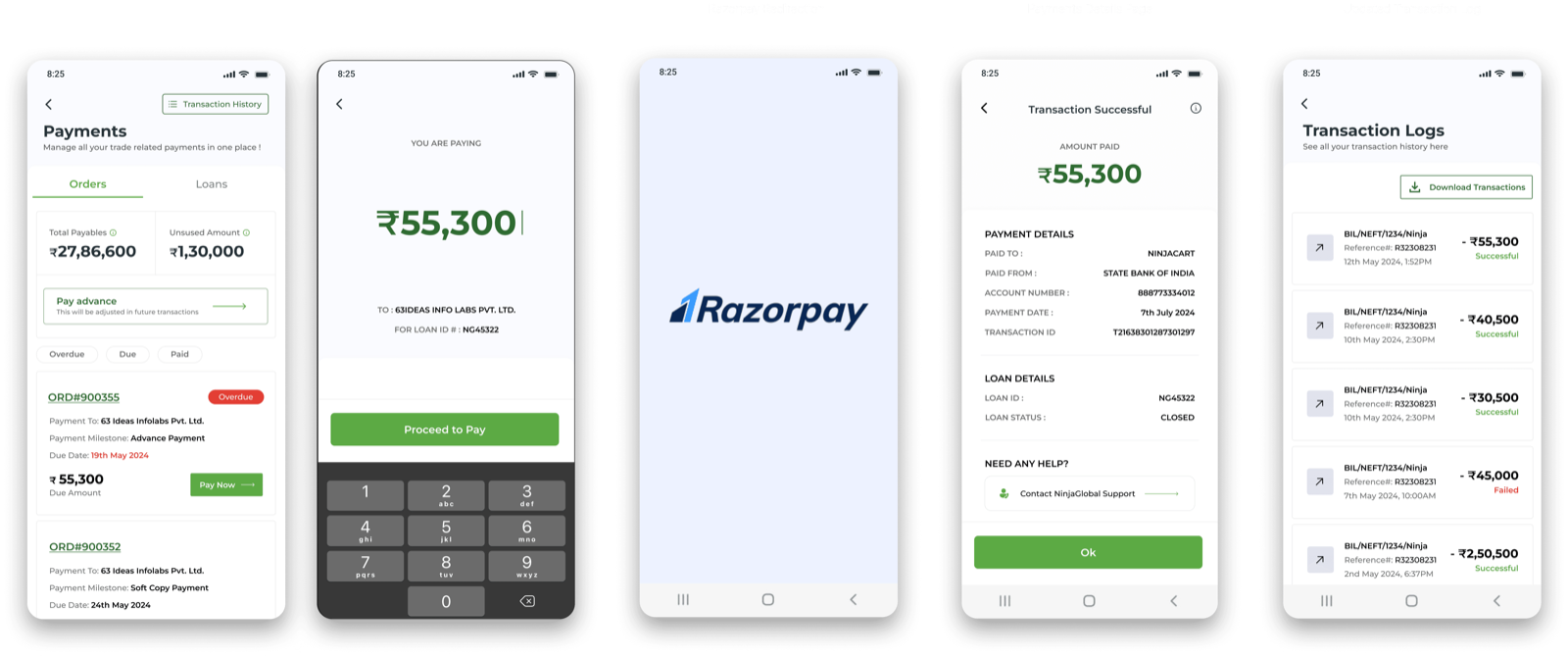
An end-to-end in-app payment module handles payments for trades (and any loans a user holds): the buyer registers the payment and the seller accepts or rejects it. For edge cases — imports, exports, and very high-value payments — users can pay through an external process and simply make an outside-payment entry in-app.
Powerful ERP, in one place
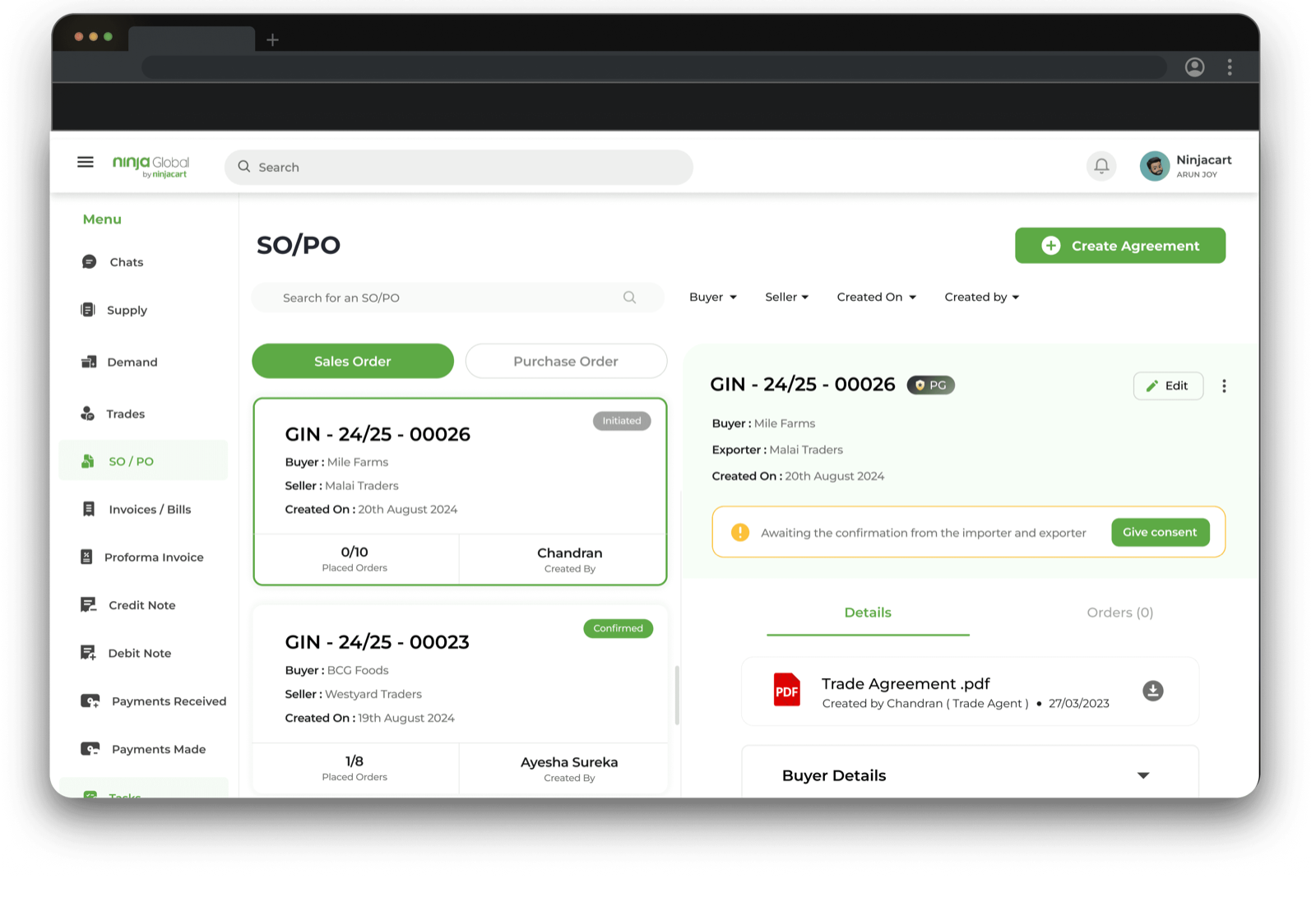
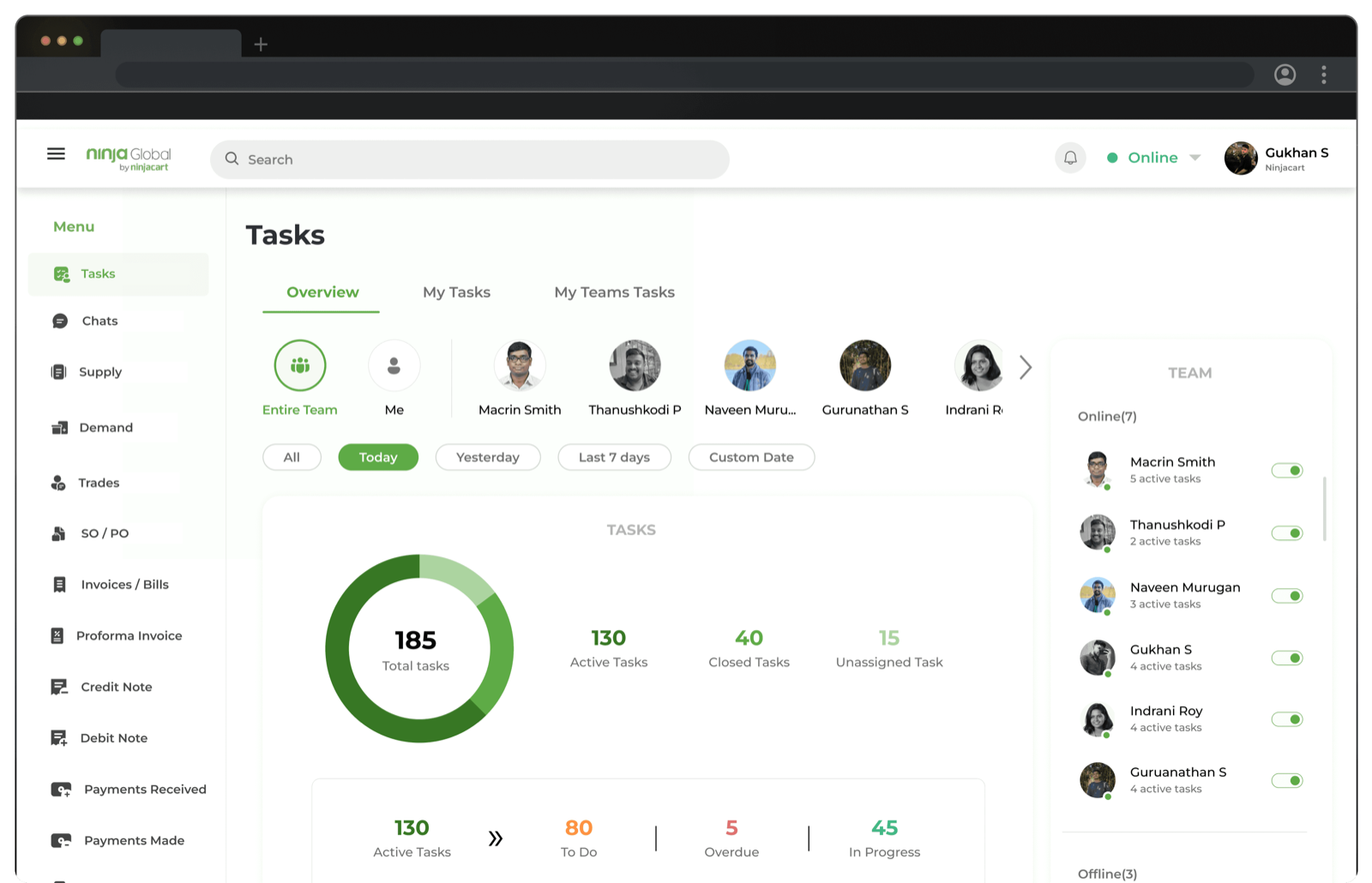
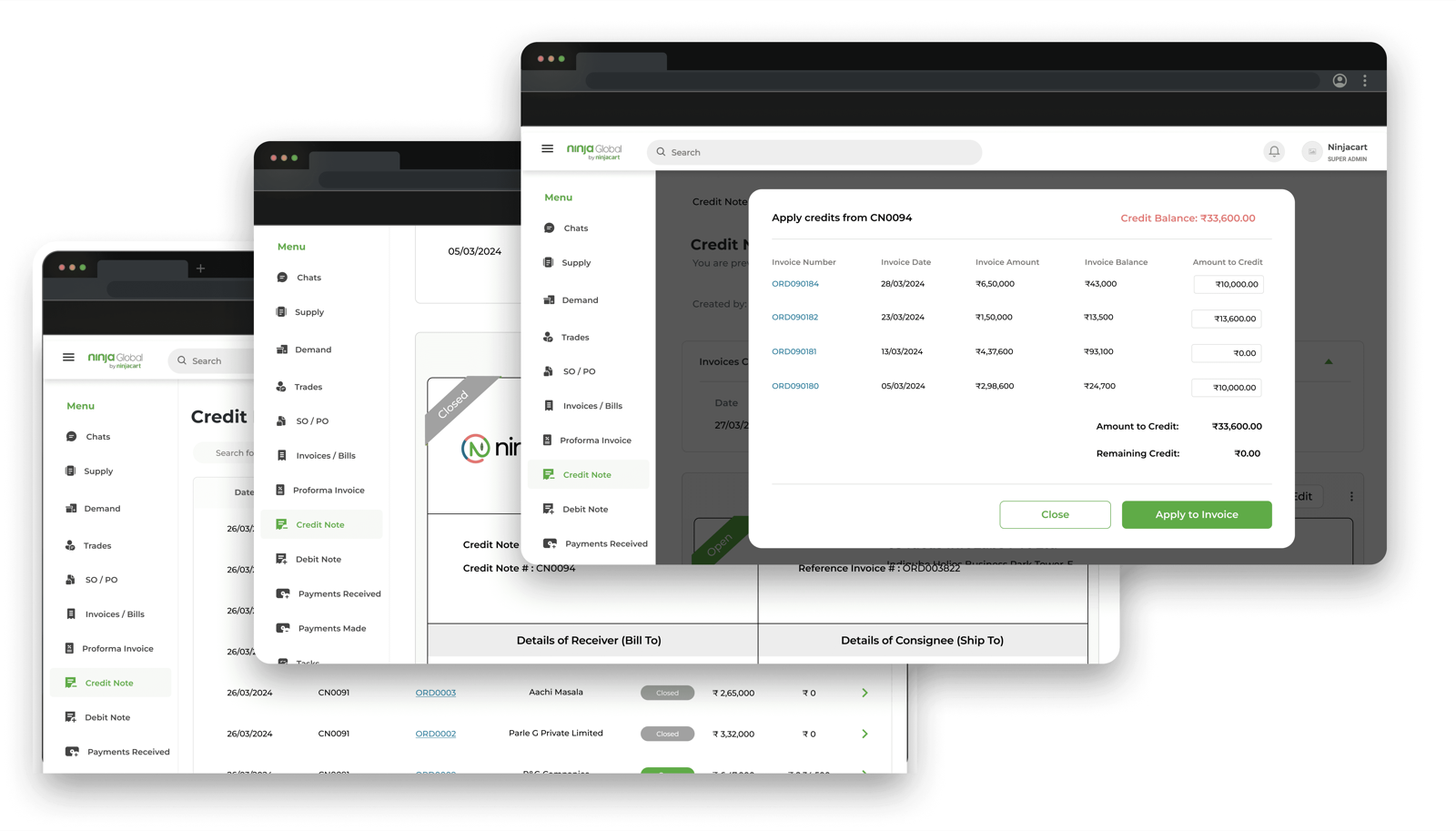
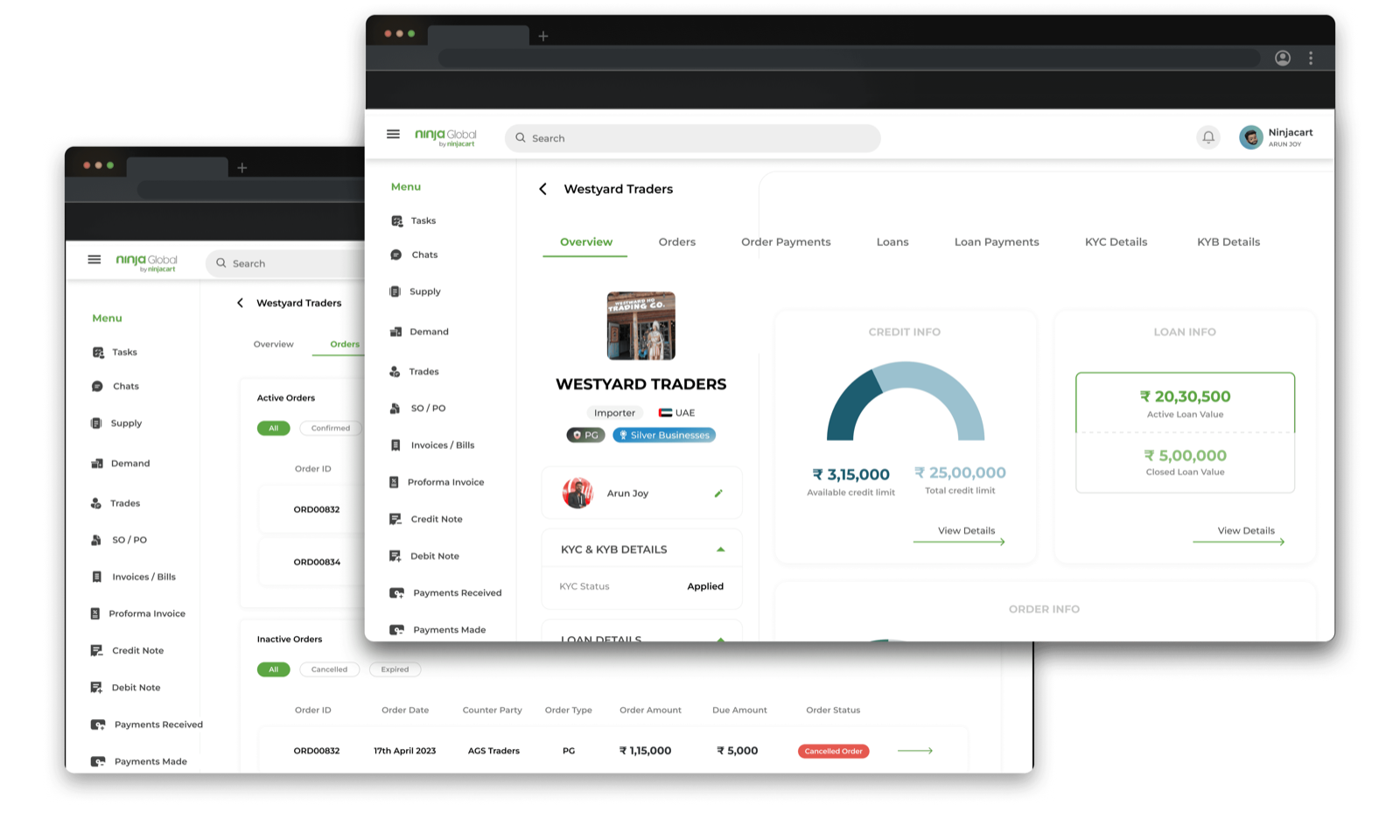
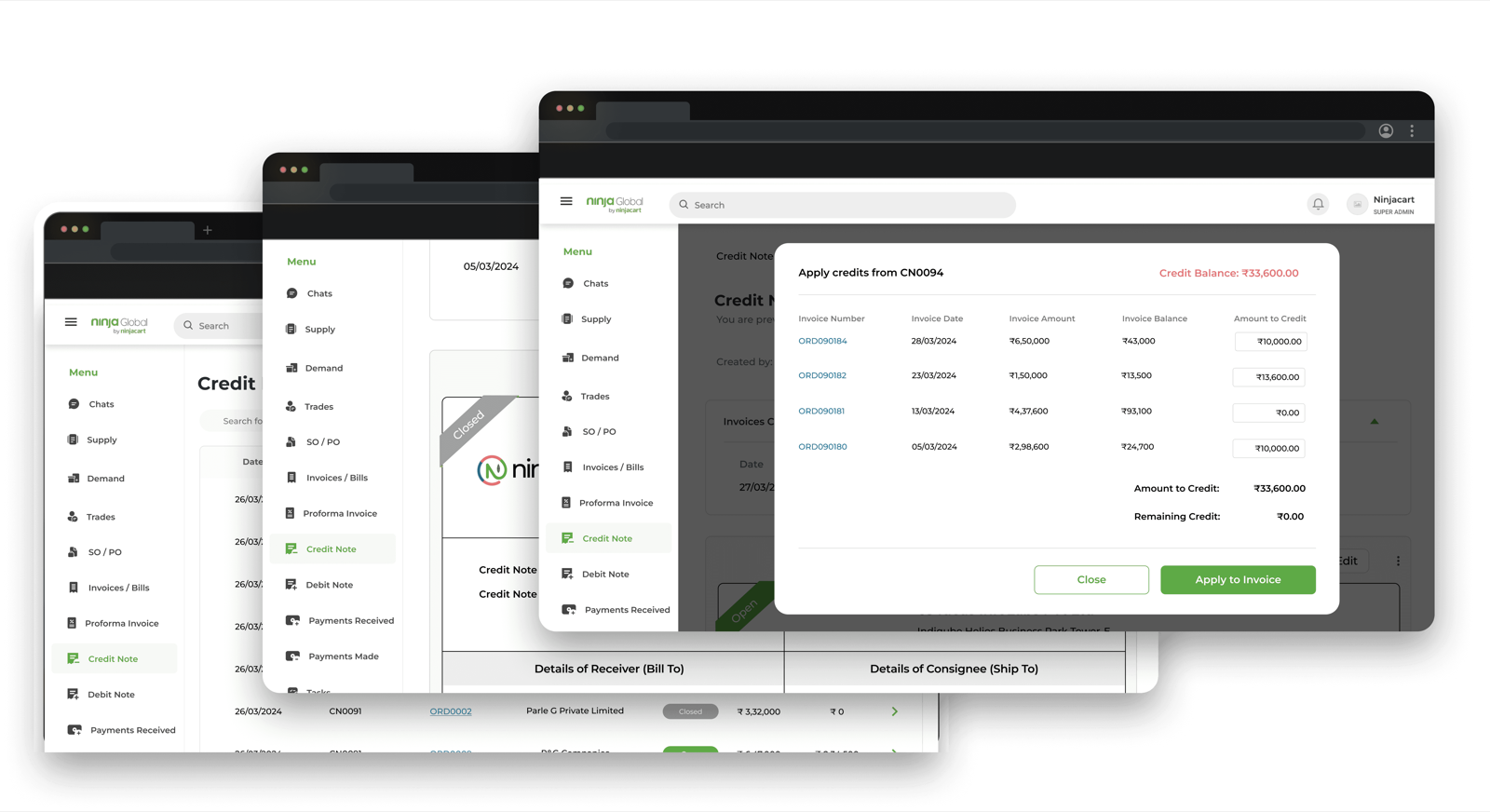
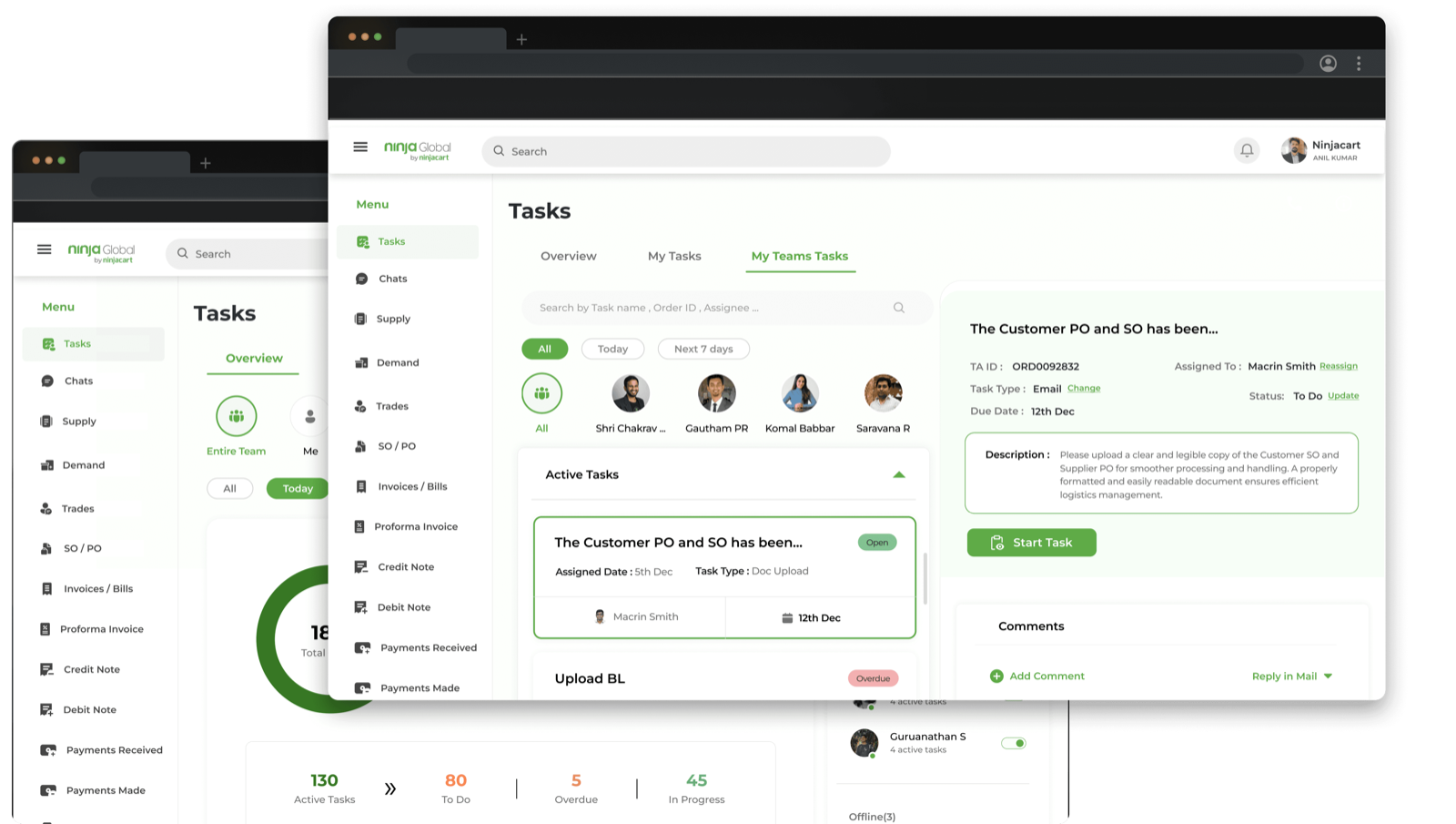
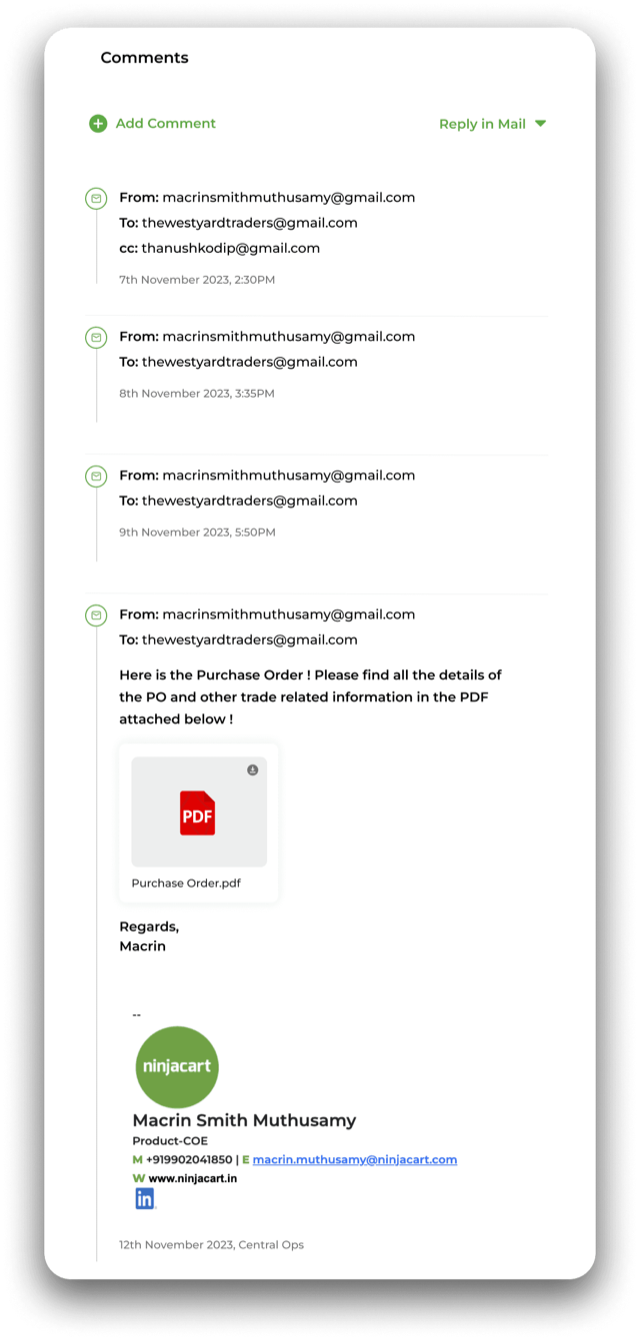
The system is built on powerful ERP capabilities: track and manage the entire lead inventory, a full section to onboard, track and maintain the customer base, track, manage and apply credits, and an efficient task module to manage your team's and your own tasks — down to a sample email thread inside Tasks.
Now running all of Ninjacart's trade.
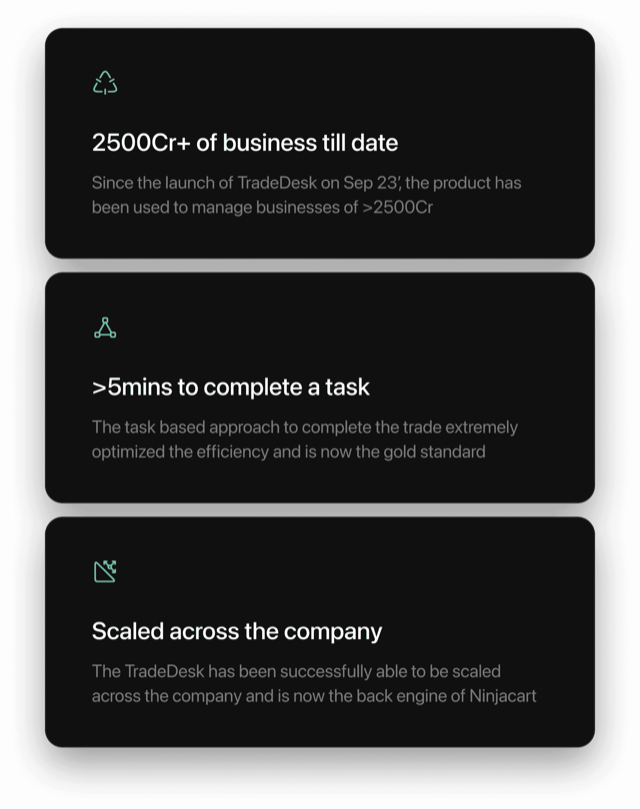
The Trade Desk was highly praised by customers and stakeholders for its efficiency from the moment it launched, and became one of the most successful projects in the company — now acting as the back-engine of Ninjacart's entire trade business.
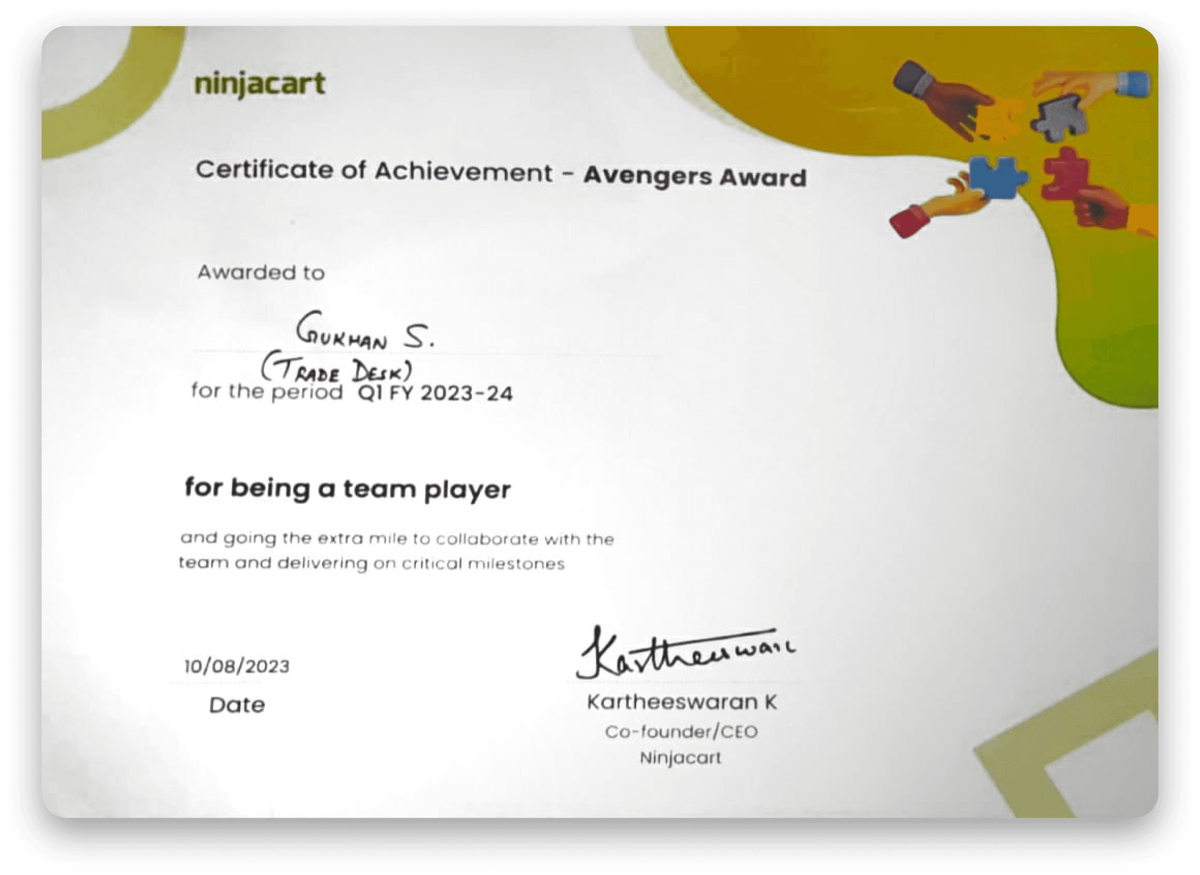
The fun and sleepless nights.
Owning a company-critical platform end to end — the product calls and the design, alone — taught me how much precision in both can move a business.
Designing one open, scalable system that had to fit many trade use-cases sharpened how I think about modularity and reuse.
And shipping fast, under direct founder and business-head expectation, was the kind of pressure that makes the work — and the designer — better.