I turn ambiguous business problems into products that work in the real world.
Seven years across fintech, lending, logistics and marketplaces — building products from the first decision through to real-world scale.
› The 20-second version
- Context
- Regulated onboarding requires matching a live face to a government ID. Too loose and you onboard fraudsters; too strict and you lose genuine customers at the last step.
- My role
- Product Owner for the selfie & liveness flow — capture UX, scoring thresholds, and the audit trail an auditor actually reads.
- Key decision
- Score and keep every attempt instead of a single pass/fail. Retakes became evidence rather than friction, and each decision got a reviewable trail.
- Result
- 2L+ verifications a day, each with a liveness score, a face-match confidence and a timestamped attempt history.
The tradeoff: every point I moved the liveness threshold traded fraud caught against genuine users rejected. A stricter bar blocks more spoofs and also blocks a real customer in poor light holding a cheap phone. I tuned for the lender's loss appetite, not for the cleanest demo — and made the threshold configurable rather than baked in.
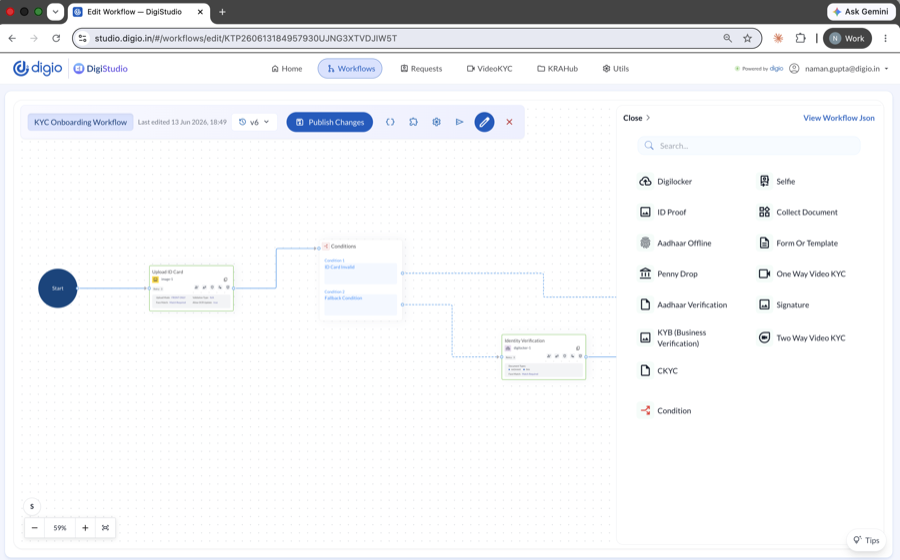
Aadhaar Photo


Event instrumentation per client and step
› The 20-second version
- Context
- Retailers buying fresh produce daily had no formal credit history, so banks wouldn't lend. Working capital was the constraint on how much they could buy.
- My role
- Product Manager, 0→1 — from the first underwriting rule to a live lending product at national scale.
- Key decision
- Underwrite on observed buying behaviour on the platform rather than on financial statements nobody had. Transaction history became the credit signal.
- Result
- ~$350M in annual disbursals, with NPAs down from 6% to 2% as the scoring tightened.
The tradeoff: lower NPAs and higher GMV pull in opposite directions. Tightening limits is the fastest way to clean up a book and the fastest way to starve good retailers of the credit that grows it. I moved limits down for thin-history buyers and up for proven ones, so the book got safer without the platform losing its best customers.


Karza · Razorpay · Xflow · Onfido
› The 20-second version
- Context
- Onboarding is a funnel with a dozen places to quit — a failed selfie, a missing document, a bank's OTP timing out. Every abandoned journey is acquisition spend already paid for.
- My role
- Product Owner — instrumenting the funnel, defining the drop-off taxonomy, and designing the nudge logic on top of it.
- Key decision
- Treat the reason for the drop-off as the trigger, not the drop-off itself. Someone blocked by a document problem needs a different message from someone who simply got distracted.
- Result
- Stalled journeys get a targeted nudge tied to the step that failed, instead of a generic "complete your KYC" blast.
The tradeoff: nudges have a hard ceiling before they become spam, and the channel is shared with the lender's own messaging. Retargeting harder lifts recovery and burns goodwill and SMS budget at the same time — so the cap on messages per journey was a product decision, not a technical one.
Watch them convert.
Capped messages per journey
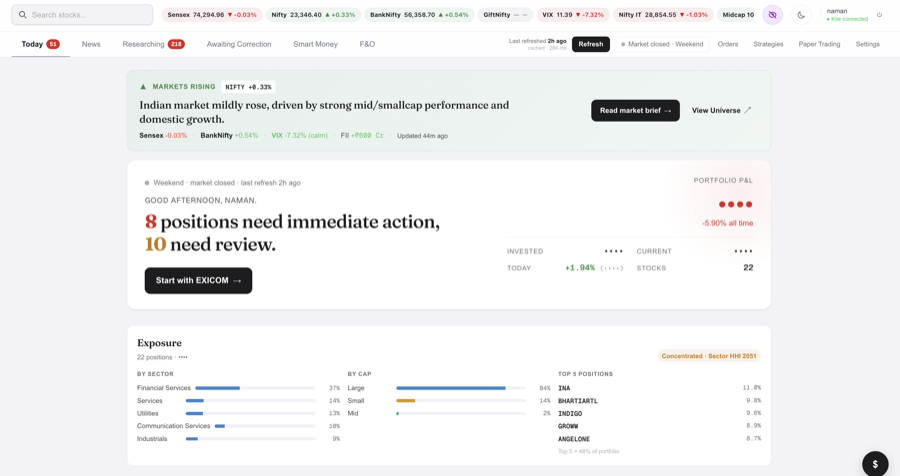
Runs every morning
A difficult product decision? Let’s work through it.
Sometimes you need someone experienced to help decide what to build. Sometimes the product exists but users aren’t getting through it. And sometimes a feature looks promising until you examine what happens when it gets something wrong. Fixed scope or ongoing, your call.
Product Discovery & Strategy
For teams entering a new market, launching a product line, or unsure what to build next.
- Customer and funnel research with root causes, not opinions
- Market-entry and competitor review
- Prioritised roadmap with clear success metrics
- Backlog-ready specs your team can pick up
Funnel & Growth Diagnostics
For products where users drop off — onboarding, quote-to-booking, checkout, KYC.
- Step-by-step drop-off map of your live funnel
- Root-cause analysis with data and user evidence
- Ranked fix list, effort vs impact
- Experiment plan to prove the fixes
Fractional Product Lead / AI Advisory
For founders without a senior PM, or teams making their first big AI bet.
- Weekly working sessions on live product decisions
- Roadmap, prioritisation and spec reviews
- AI feature scoping: eval sets, build-vs-buy, kill criteria
- Hiring input for your first product hires
Built and scaled products across fintech, lending, logistics and identity — Ninjacart (Walmart-backed), Cogoport, Capital One (US patent), Digio — and currently consulting for a Dubai-based freight-tech marketplace.
Understand the problem. Make the call. Leave something usable.
Find the real problem
One call to work out where the real cost sits — good users dropping out, a roadmap pulling in three directions, or engineering time going into something a vendor already solved.
Decide with evidence
I write the spec from your data and your users, with the failure modes and success metrics attached, so "is it working?" has an answer that isn't an opinion.
Make it actionable
You get the artefacts your team builds from — specs, metrics, a prioritised list — not a slide deck that needs translating.
Earlier work
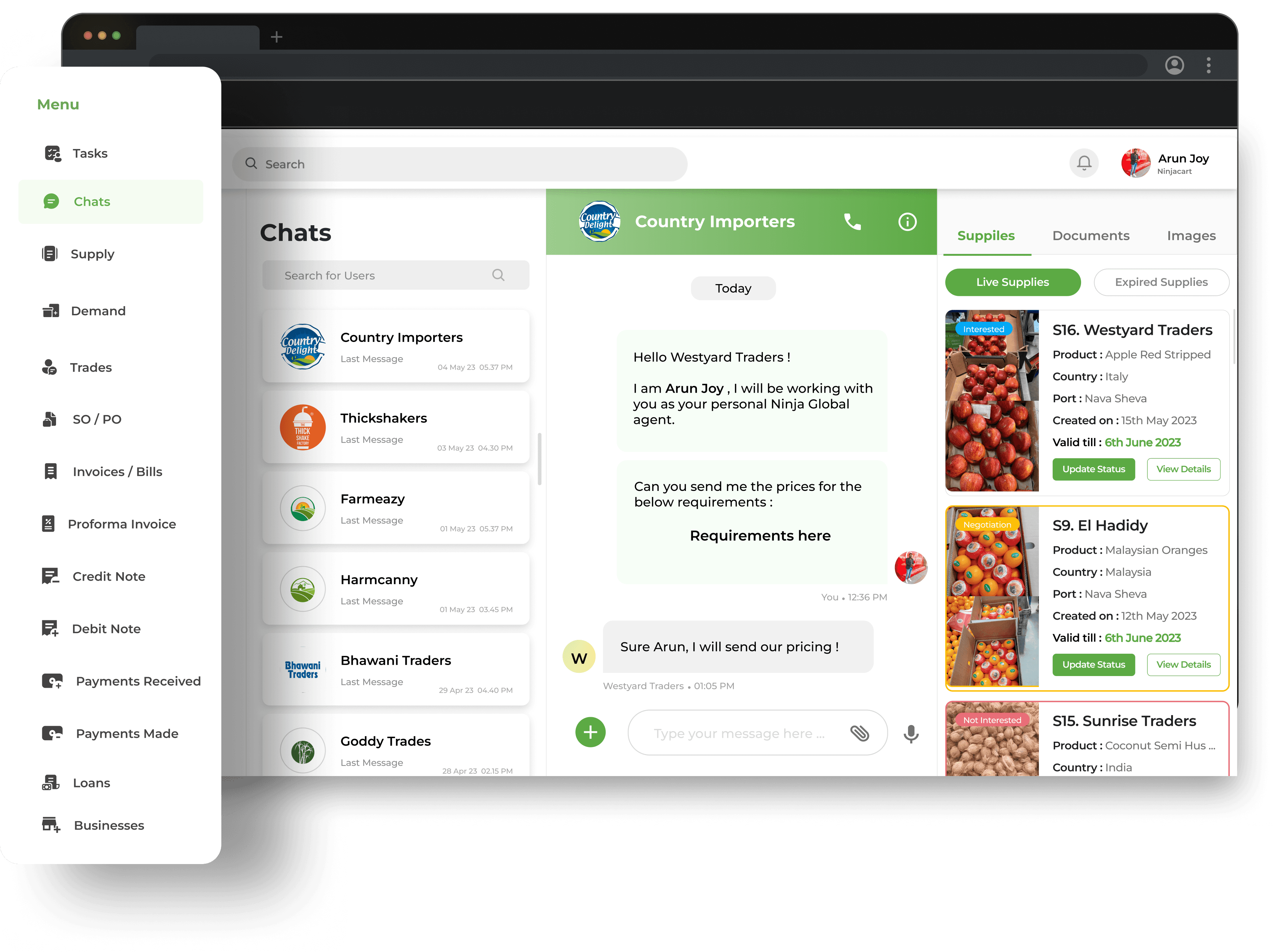
A commerce platform I built at Ninjacart, kept here for completeness.

Have a product problem worth solving?
Hiring for a senior product role, or deciding what to build next? Tell me what you’re working through and I’ll give you an honest view of where I can help.